If you've ever Googled "is spray tanning safe," you've probably come across the word DHA. And if you're like most people, seeing a three-letter chemical abbreviation next to the word "skin" made you a little nervous.
Here's the truth: DHA is one of the most well-studied and well-understood ingredients in cosmetics. It's been FDA-approved for topical use since 1977, and it's the only ingredient that actually creates a sunless tan. Understanding what it is and how it works will probably make you feel a lot better about booking one.
What DHA Actually Is
DHA stands for dihydroxyacetone. Despite the clinical-sounding name, it's a simple sugar — a three-carbon molecule most commonly derived from sugar beets or sugar cane.
When DHA is applied to your skin, it reacts with the amino acids in the outermost layer of dead skin cells (the stratum corneum). This reaction is called the Maillard reaction — the exact same chemical process that turns bread golden when you toast it.
The result? Brown-toned compounds called melanoidins that sit entirely within dead skin cells. Your tan develops over 2–8 hours, deepens over 24–72 hours, and fades naturally as your skin sheds — usually over 5–10 days, depending on prep and aftercare.
Key point: DHA does not involve melanin, UV exposure, radiation, or any living skin cells. It's a surface-level reaction with cells your body was already going to shed.
Is DHA Safe?
Yes. Here's why:
- FDA-approved since 1977 for external cosmetic use — nearly 50 years of approved use with no documented systemic adverse effects
- Does not penetrate past the stratum corneum — studies using Franz diffusion cells show negligible absorption into living tissue
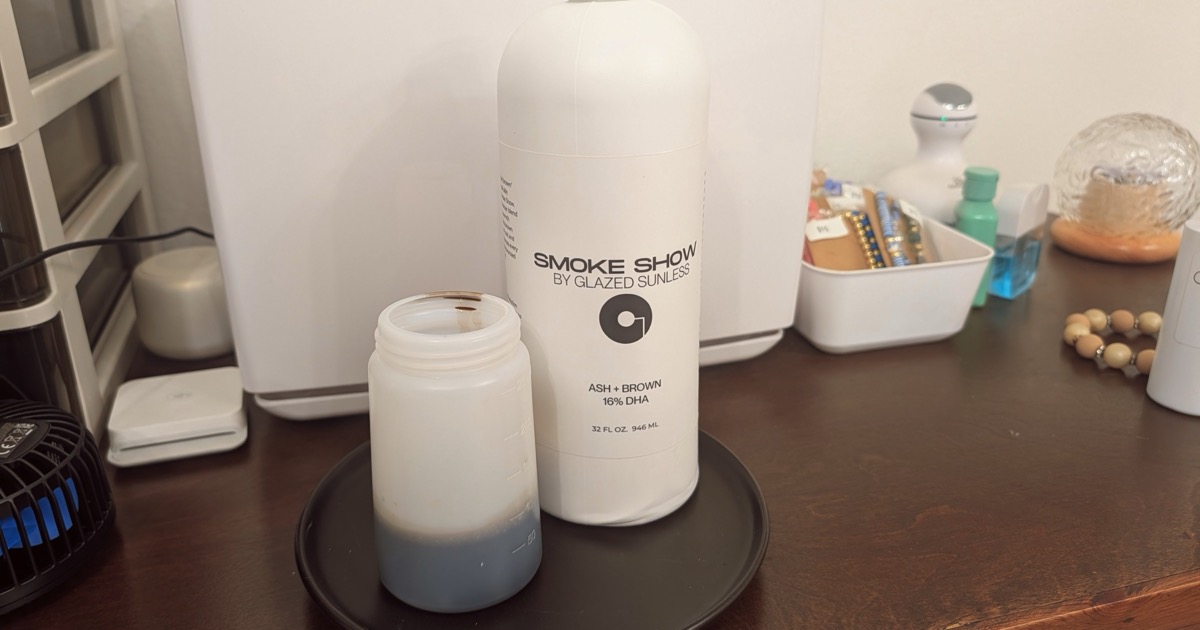
- Non-carcinogenic, non-mutagenic, and non-toxic at the concentrations used in spray tan solutions (typically 5–20% in professional formulas — the bottle I use is 16% DHA)
- Reviewed and confirmed safe by the Cosmetic Ingredient Review Expert Panel
DHA doesn't enter your bloodstream. It doesn't affect your DNA. It doesn't stimulate melanocytes. It stays on the surface of your skin, reacts with dead cells, and eventually sheds off with them.
The One Real Safety Consideration
The FDA's approval of DHA explicitly covers external application to the skin — not inhalation, not ingestion, and not contact with mucous membranes (eyes, lips, nose). The agency specifically notes that DHA exposure to areas covered by mucous membranes — the lips, nose, and area in and around the eye — should be avoided because the long-term risks of those exposure routes are unknown.
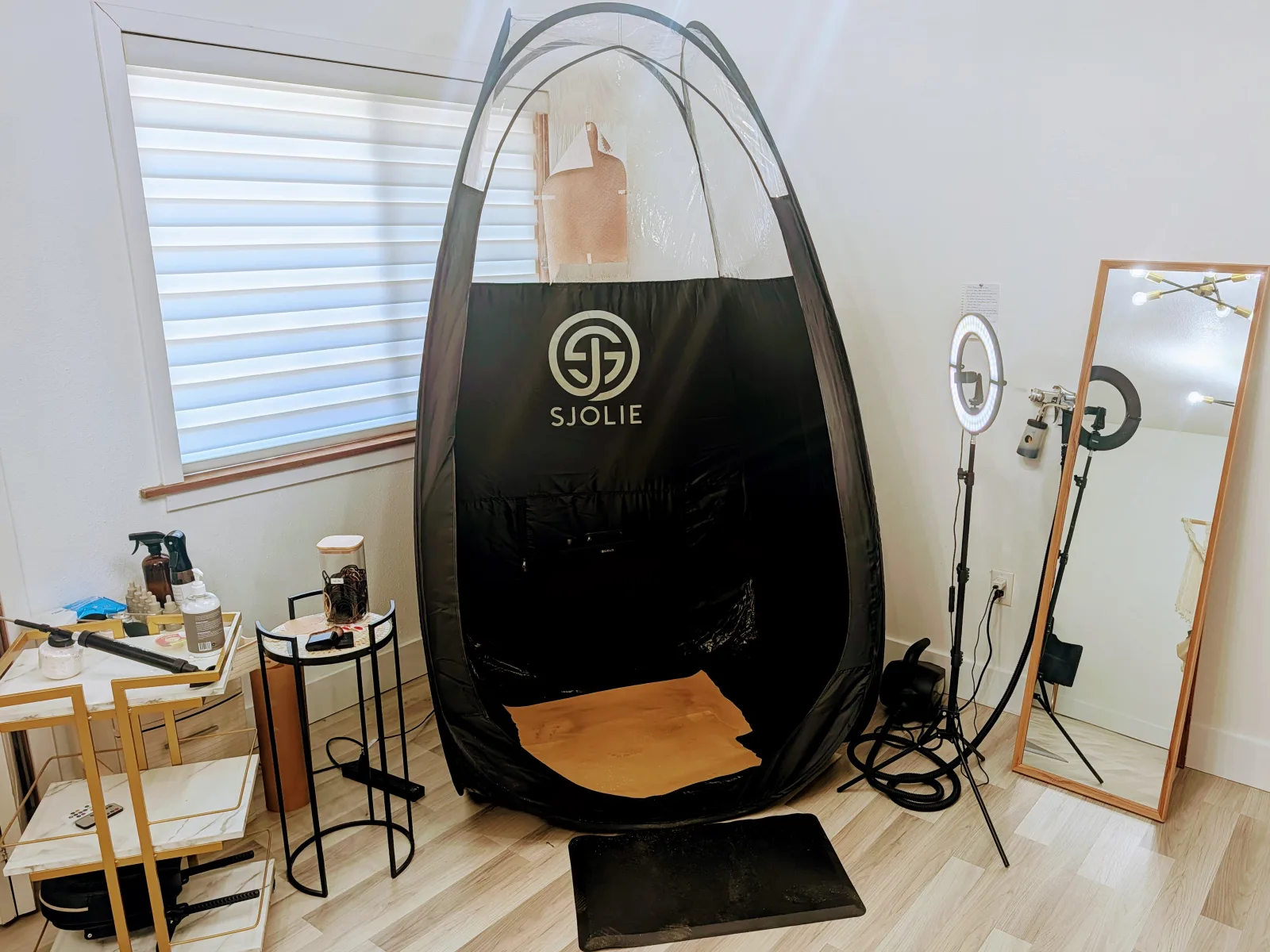
This is why a professional spray tan matters. At 33 Esthetics, I use proper ventilation, provide nose and lip protection, and keep the solution away from your eyes. The DHA itself isn't the concern — it's the application method. A trained technician in a proper setup eliminates this risk entirely.
Myths vs. Facts
"Spray tans cause cancer." No. DHA does not reach living cells, does not involve UV radiation, and has no mutagenic properties. There is no evidence linking topical DHA use to cancer.
"DHA is a harmful chemical." It's a plant-derived sugar. The word "chemical" triggers alarm, but water is a chemical. DHA is one of the simplest, most studied cosmetic ingredients available.
"My spray tan will protect me from the sun." It won't. The melanoidins produced by DHA are not melanin. A DHA tan provides zero UV protection. You still need sunscreen — always.
"All spray tan solutions are the same." Not even close. Cheap, low-quality DHA formulas are often poorly pH-balanced, lack color correction, and use harsh preservatives. This is why some spray tans turn orange and fade unevenly, while others look natural and wear off gradually. The ingredient quality and formulation matter enormously.
What About Pregnancy?
This is a common question, and it's an important one. There is no strong evidence that topical DHA is harmful during pregnancy — the ingredient stays on the surface of the skin and does not enter the bloodstream in meaningful amounts.
That said, pregnancy changes your skin in ways that can affect how a spray tan develops — hormone shifts can cause uneven absorption, unexpected color, or heightened skin sensitivity. Some women find that spray tans just don't sit the same way during pregnancy.
My recommendation: always talk to your doctor first. Every pregnancy is different, and your OB or midwife is the right person to clear you. If they give you the go-ahead and you'd like to book, just let me know — I can adjust the solution and application to be as gentle as possible.
Why Professional-Grade DHA Makes the Difference
| Professional Grade | Cheap Formula | |
|---|---|---|
| DHA source | Plant-derived, high-purity | Lower purity, more byproducts |
| Color tone | Color-corrected to avoid orange | Often turns orange or muddy |
| pH balance | Carefully buffered for even development | Poor pH = splotchy, uneven tan |
| Skin care | Includes aloe, hyaluronic acid, vitamins | Minimal hydration, harsh preservatives |
| Smell | Odor-neutralizing technology | Strong "biscuit" smell post-tan |
| Fade | Even, gradual | Patchy, streaky |
At 33 Esthetics, I use Smoke Show by Glazed Sunless — a professional-grade 16% DHA solution with an ash and brown bronzer base designed to neutralize the orange and red undertones cheaper formulas produce. It's pH-balanced, color-corrected, and built for pros who care about consistency. Glazed Sunless was founded by spray tan artist Audrey Lyons and has become one of the go-to lines for studios that take color matching seriously. The result on my clients is a tan that looks like you just came back from vacation — not like you stood in a machine at the gym.
The Bottom Line
DHA is a sugar. It reacts with dead skin cells. It doesn't penetrate, it doesn't damage, and it doesn't involve UV exposure. It's been safely used in cosmetics for nearly half a century.
The variables that actually matter are the quality of the solution and the skill of the person applying it. A professional-grade formula applied in a private studio with proper safety protocols is about as low-risk as a cosmetic service gets.
What is DHA in a spray tan?
DHA stands for dihydroxyacetone — a simple sugar derived from sugar beets or sugar cane. When applied to skin, it reacts with amino acids in the outermost layer of dead skin cells through the Maillard reaction (the same process that turns bread golden when toasted). The result is brown-toned compounds called melanoidins that create the appearance of a tan. DHA does not involve melanin, UV exposure, radiation, or any living skin cells.
Is DHA in spray tans safe?
Yes. DHA has been FDA-approved for external cosmetic use since 1977 — nearly 50 years of approved use with no documented systemic adverse effects. It does not penetrate past the stratum corneum, is non-carcinogenic, non-mutagenic, and non-toxic at the concentrations used in spray tan solutions. The one real consideration is avoiding inhalation and contact with mucous membranes, which is why professional application with proper ventilation and nose and lip protection matters.
Will a spray tan protect me from the sun?
No. A DHA spray tan provides zero UV protection. The melanoidins produced by DHA are not melanin and do not act as a sun barrier. You still need sunscreen after getting a spray tan — always.
Why do some spray tans turn orange?
The orange result comes from low-quality DHA formulas that are poorly pH-balanced and lack color correction. Cheap solutions often use lower-purity DHA with more byproducts, which creates an orange or muddy tone instead of a natural tan color. Professional-grade formulas are carefully pH-buffered and color-corrected to develop evenly and look natural. This is one of the main differences between a custom spray tan in a private studio and a booth tan or cheap salon service.
Can I get a spray tan while pregnant?
There is no strong evidence that topical DHA is harmful during pregnancy — it stays on the surface of the skin and does not enter the bloodstream in meaningful amounts. That said, pregnancy changes your skin in ways that can affect how a tan develops: hormone shifts can cause uneven absorption, unexpected color, or heightened sensitivity. Always talk to your doctor or midwife first. If they give you the go-ahead, let your esthetician know so the application can be adjusted accordingly.
How long does a spray tan last?
A DHA tan develops over 2 to 8 hours, deepens over 24 to 72 hours, and fades naturally as your skin sheds — typically over 5 to 10 days. How long it lasts depends largely on your skin prep before the appointment and your aftercare routine afterward. Full breakdown: How long does a spray tan last?
Curious? Your first spray tan at 33 Esthetics is $40 — I'll walk you through everything, including what to do before and after. Read the full prep and aftercare guide to get the most out of your appointment.
If you're comparing options in the area, I also wrote a guide on what to look for in a spray tan in Orlando and a full breakdown of how much spray tans cost.
.webp)