If you’ve ever wondered “Should I go to a spray tan booth or a spray tan artist?” you’re not alone.
Both options can work — and plenty of people love booths. But they’re not the same experience, and they don’t behave the same on your skin.
This post isn’t about bashing booths. It’s simply a clear breakdown of why they’re different, why booths sometimes create undesirable results, and who tends to be happiest with each option.
Quick Answer
A booth is fast and convenient but one-size-fits-most — same spray pattern, same timing guidance, no hands-on adjustments. A spray tan artist customizes to your skin tone, undertone, dryness level, and the areas (hands, feet, knees, ankles) that need extra care.
Here's how they compare side-by-side:
| Spray Tan Booth | Custom Airbrush Artist | |
|---|---|---|
| Typical cost | $25–$35 | $45–$75+ |
| Time in the room | 3–5 min | 30–60 min |
| Customization | None — same formula, same angles | Shade, depth, undertone all customized |
| Hands & feet | No hand-blending — color can pool | Hand-blended so they don't look "tell-tale" |
| Undertone matching | None | Matched to your skin tone |
| Dry spot adjustments | None — booth can't see them | Real-time correction at the chair |
| Privacy | Curtained booth or open salon | Private studio, one-on-one |
| Prep & aftercare guidance | Usually none | Sent before + walked through after |
| Best for | Repeat clients who know their skin | First-timers, events, photos, weddings |
If you're new, you may also like: How Much Does a Spray Tan Cost in Orlando?.
Why Booth Tans Can Look Uneven (and It’s Not Always Your Fault)
A booth is basically trying to “guess” your body.
Even when you follow directions perfectly, booths can still struggle with:
1) Dry patches (knees, ankles, hands, elbows)
DHA grabs onto dry skin faster, which can make these spots look darker.
Prep matters a lot here: How to Prep for a Spray Tan & Make It Last.
2) Missed areas + awkward angles
Armpits, inner arms, sides of the torso, and behind the legs are common “miss” zones.
3) Over-application in creases
Underarms, wrists, behind knees, and between fingers/toes can collect extra solution.
4) Tone that doesn’t match your undertone
A booth can’t look at your skin and go, “Let’s warm this up,” or “Let’s keep this more neutral.”
If you want the science behind color development, this helps: What Is DHA? The Science Behind Your Spray Tan.
What a Spray Tan Artist Does Differently
A custom airbrush tan is not just “someone spraying you.” A good artist is adjusting for real-world skin.
Here’s what changes:
1) Custom shade + depth guidance
We can choose a tone that looks natural on your skin, and I’ll guide you on how long to leave a rapid formula on.
2) Prep check (and real-time adjustments)
If I see dryness or areas that will grab too much color, we can correct it before it becomes a patchy fade.
3) Hand-blending and finishing work
Hands, feet, wrists, and ankles are where the “fake” look happens first — and those areas benefit most from hands-on blending.
4) Comfort + privacy
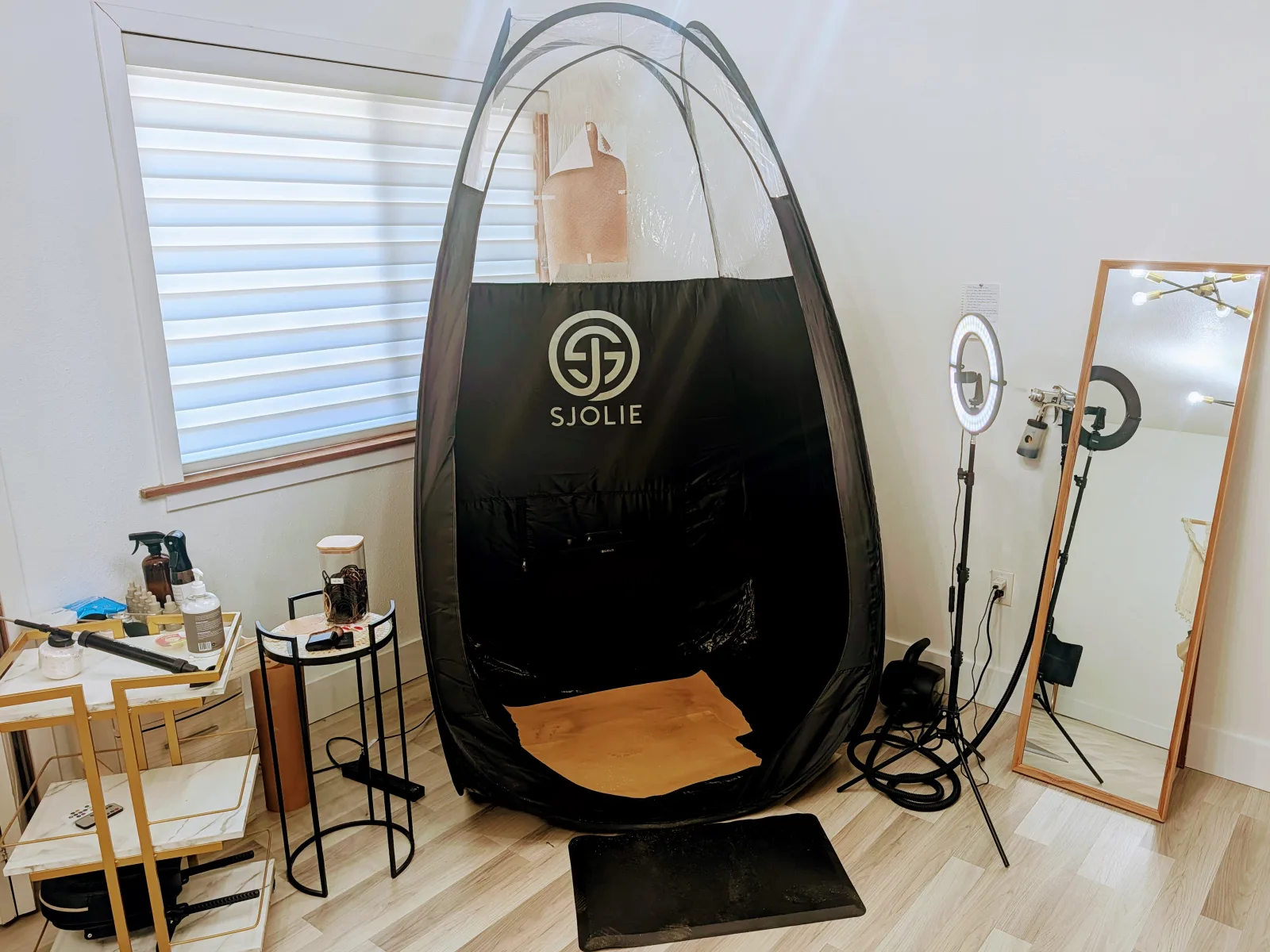
At 33 Esthetics in Longwood, it’s a private studio — no rushing, no awkward waiting room, no feeling exposed.
5) Application protection
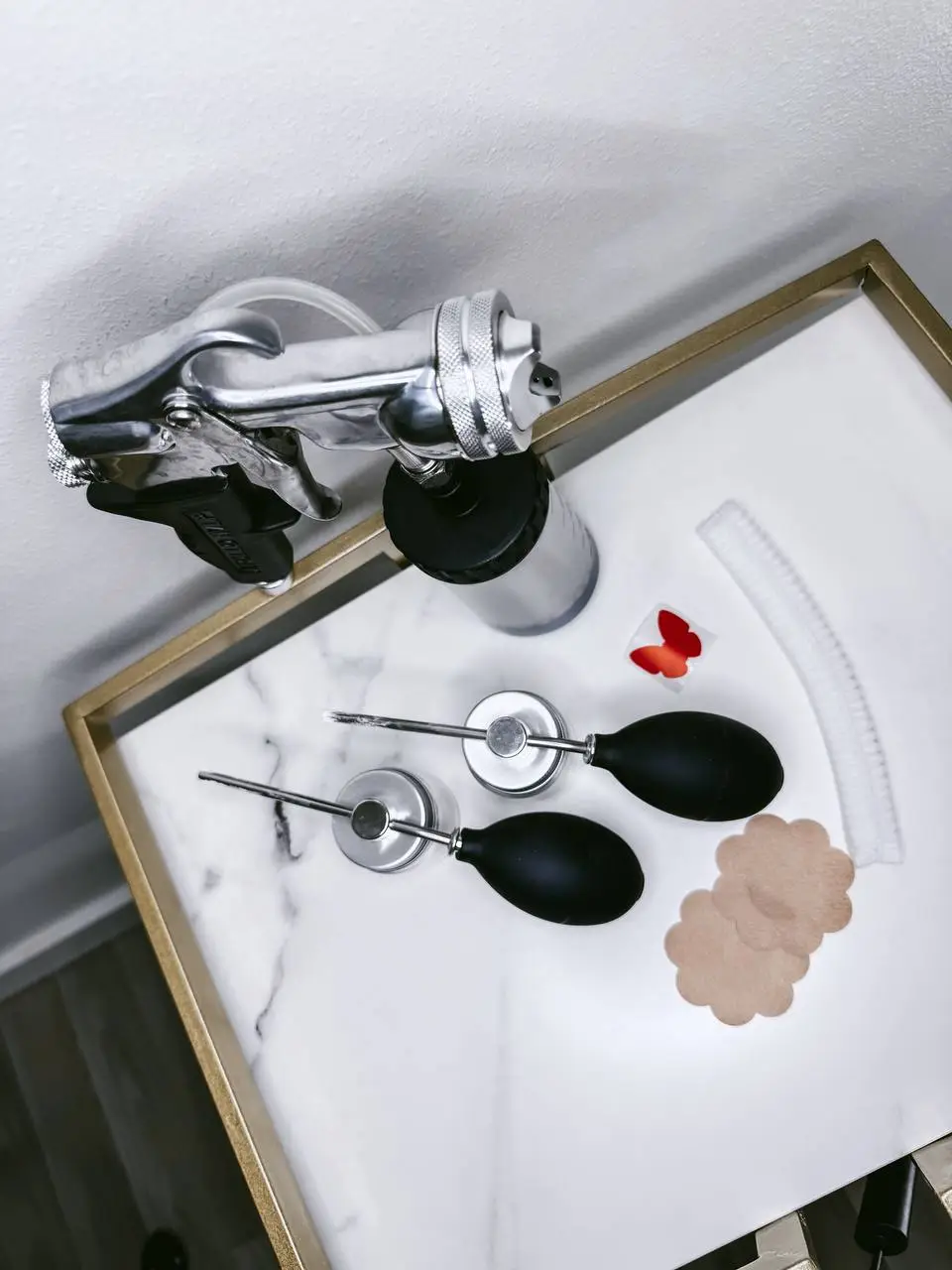
The FDA's guidance on DHA in sunless tanning products specifically calls out avoiding inhalation and contact with mucous membranes — the lips, nose, and area around the eyes. In a hands-on application, I can position you, time the spray, and provide nose and lip protection in a way an unattended booth can’t.
Who a Booth Is Great For
A booth might be a good fit if you:
- want the fastest option
- don’t mind a more “standard” result
- already know exactly how your skin develops
- aren’t picky about hands/feet finishing detail
Who Usually Prefers an Artist-Applied Tan
A custom tan is usually the better fit if you:
- are a first-timer
- have had booth tans pull orange, streaky, or patchy before
- have very fair skin, very dry skin, or uneven texture
- want the most natural result for photos (vacations, events, weddings)
- want help making it last longer and fade evenly
If longevity is your top priority, read: How Long Does a Spray Tan Last?.
If You Use a Booth: Tips for Better Results
If you love booths and want to keep using them, these tips help a lot:
- Exfoliate the day before (not the day of)
- Shave 24 hours before (or wax 48 hours before)
- Skip lotion/oils/deodorant on the day of
- Use a small amount of barrier cream on very dry areas (knees/ankles/elbows)
- Rinse according to instructions — don’t guess
Booking a Spray Tan at 33 Esthetics (Longwood, FL)
If you want to try a custom spray tan in a private studio:
And if you’re choosing between options in the Orlando area, this guide is helpful: Best Spray Tan in Orlando — What to Look For.
Are spray tan booths bad?
Not at all. Booths are popular because they’re fast, convenient, and budget-friendly. The biggest difference is that booths are one-size-fits-most, while an artist-applied tan is customized to your skin tone, dryness level, and the areas that tend to develop darker (hands, feet, knees, ankles).
Why do booth spray tans sometimes look streaky or uneven?
Booths can miss or over-spray certain angles, and they can’t adjust in real time for dry patches or creases. Dry areas absorb more DHA and can go darker, and creases can collect extra solution. An artist can hand-blend and correct those areas.
Can you get a good spray tan from a booth?
Yes — many people do. The best results usually come from good prep (exfoliate the day before, shave 24 hours before, skip lotions/oils the day of) and following directions closely. If you tend to struggle with hands/feet, undertone match, or uneven fading, a custom tan with an artist is usually the easier path to a natural result.
What’s the biggest benefit of a spray tan artist?
Customization. An artist can choose a tone that suits your undertone, guide your rinse timing, adjust for dryness, and hand-blend hands/feet so you don’t get the “tell.”
How long does an artist-applied spray tan last?
Most custom spray tans last about 7–10 days with good prep and aftercare. Hot showers, chlorine, heavy sweating in the first 24 hours, friction from tight clothing, and skipping moisturizer can shorten that.